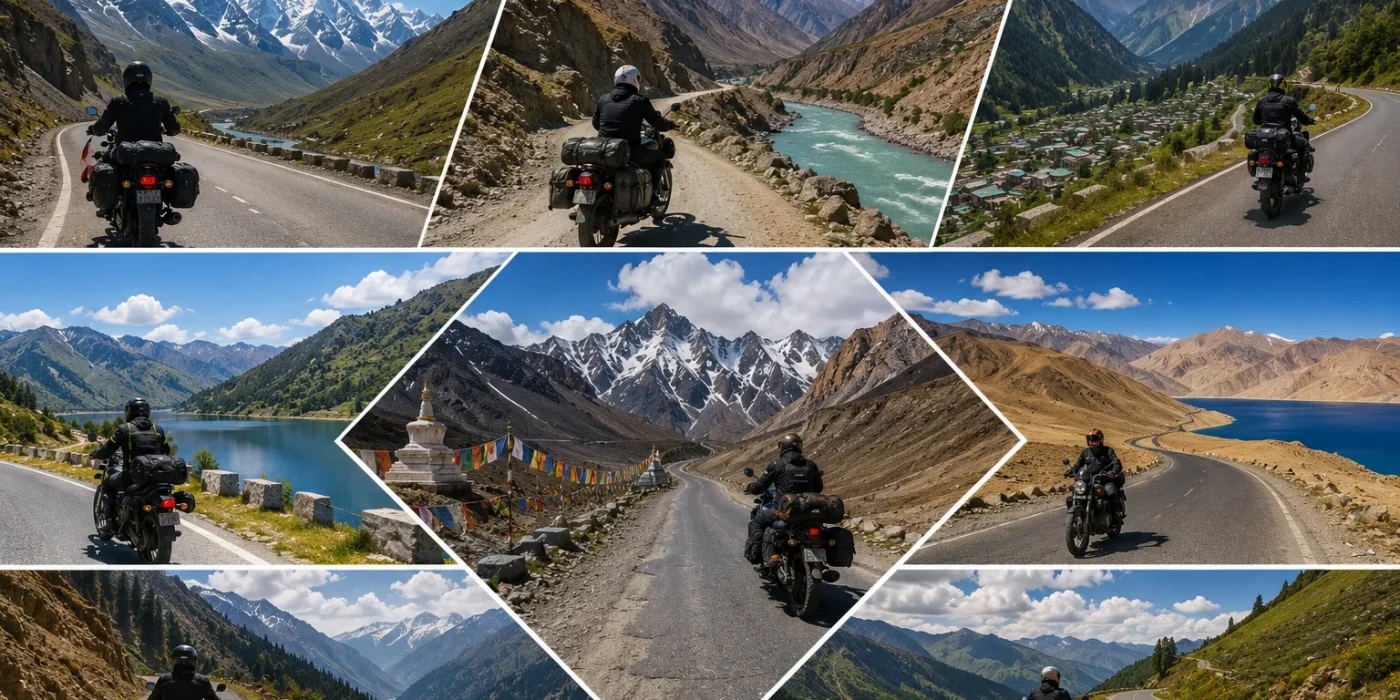
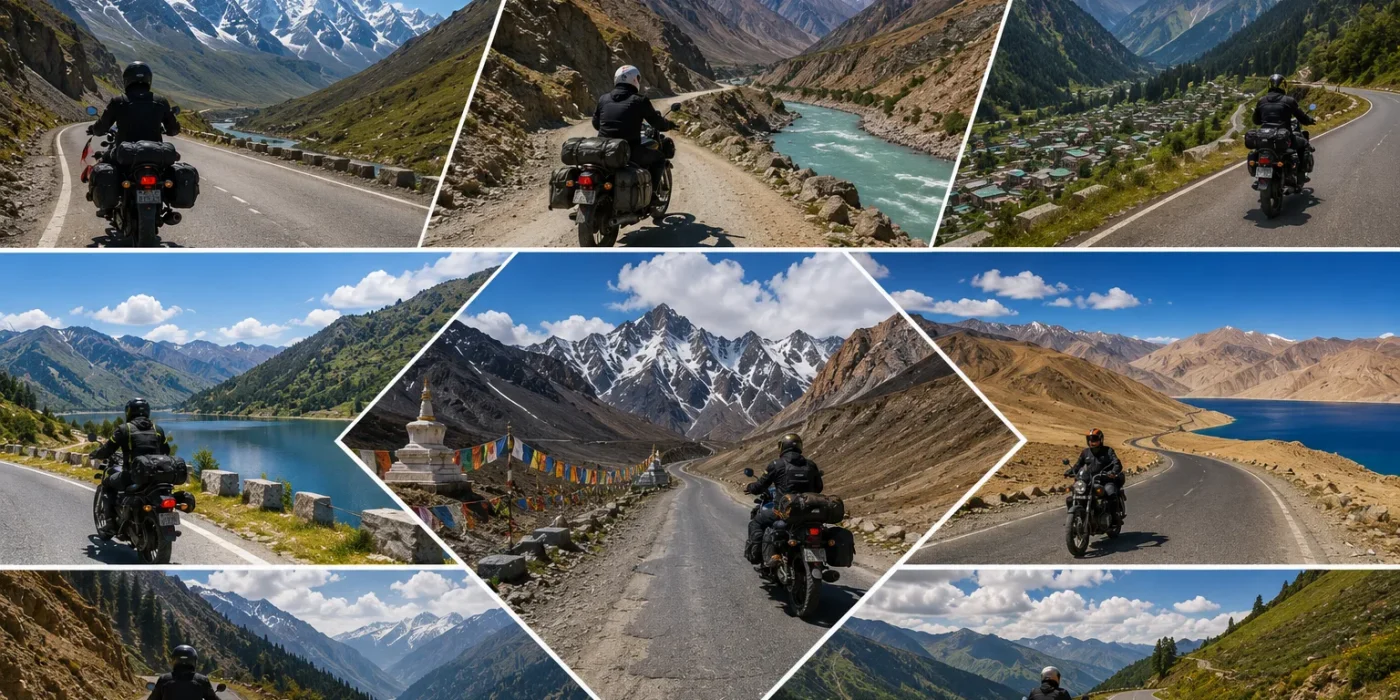
Top 7 Motorcycle Routes in North India Riders Swear By
1) Manali → Leh (The Classic High-Altitude Run)
Why riders rave: it’s pure Himalayan theatre – raw passes, moon-scapes, and high-altitude drama. Expect about 430–475 km of mountain road from Manali to Leh, with high points like Rohtang, Baralacha, and Taglang La (~5,328 m) before you roll into Leh. Two sensible travel days, stops at Keylong / Jispa / Sarchu, and steady hydration are essential. The highway is maintained by the Border Roads Organisation but closes seasonally (winter closures usually start in late November); always check BRO updates before you go.
2) Srinagar → Leh (The Lake, Passes & Valley Route)
Why riders prefer it: dramatic valley views and a gentler climb profile compared with Manali→Leh. Covering roughly 420–434 km, you pass Sonamarg, Zoji La (a legendary pass), Drass, Kargil and then Fotu La into Ladakh. It’s a full-day effort if you push, but many split it with a halt at Kargil or Drass. The road opens late spring and closes with winter snows; plan permits, and fuel stops carefully.
3) Spiti Valley Circuit (Shimla / Kinnaur → Kaza → Chandratal)
Why riders love it: lunar vistas, remote monasteries, and small-town authenticity. Two main approaches exist – via Kinnaur (Shimla → Reckong Peo → Kalpa → Nako → Kaza) or via Manali → Kunzum Pass → Kaza — each offering different landscapes and logistics. Expect multi-day riding; the circuit can be looped in 6-10 days depending on stops. Kunzum and inner Spiti roads are controlled by seasonal openings; check current pass status (Kunzum/Chandratal access varies each season).
4) Leh → Nubra → Pangong → Tso Moriri (The Ladakh Loop)
Why it’s revered: high-altitude lakes, dunes in Nubra, and surreal colours in Pangong and Tso Moriri. This circuit stitches together passes like Khardung La and, on tougher variants, Marsimik La / Umling La for the very adventurous. Riders often budget 6-10 days for a comfortable loop (and to acclimatise). Recent long-distance solo rides through Ladakh/Zanskar highlight the circuit’s increasing popularity and the mix of off-road challenges it offers.
5) Manali → Darcha → Padum (Zanskar Road — Off-road & Epic)
Why hardcore riders pick it: Zanskar is for those who like serious off-pavement riding – raw river crossings, frozen gullies early/late season, and sparse services. The Manali-Darcha-Padum route (Shinku La / Shinkula stretches) opens later in spring and is increasingly being reported as rideable in summer months, but sections remain remote and often require local intel on pass status. Expect extended stretches without fuel.
(discoverlehladakh.in)
6) Shimla → Kinnaur → Spiti (Hindustan–Tibet Highway Stretch)
Why it’s a classic: this older trans-Himalayan route (NH5) winds through orchards, carved cliffs and alpine deserts – a changing palette every day. Reckong Peo → Kalpa → Sangla → Nako → Kaza is scenic and culturally rich. The climb is gradual compared to Ladakh, which helps with acclimatisation if you plan to continue north. BRO upkeep is steady, but expect single-lane patches and tight hairpins.
7) Tirthan Valley → Great Himalayan National Park Loop (Himachal’s Green Ride)
Why it’s underrated: for riders who prefer riverside routes, pine forests, and quieter roads, the Tirthan loop (Shimla → Tirthan → Jalori Pass → Banjar) is restorative and technical enough to be fun without Himalayan extremes. This is the kind of ride that pairs morning tea stalls with single-track charm and is ideal as a warm-up before tackling higher passes.
(indiamotorbiketour.com)