
What Every Rider Should Check Before a Long Ride - Beyond Tyres and Fuel
Prioritise safety and smooth performance by inspecting all the essentials to ensure the motorcycle is fully tour-ready before hitting the open road
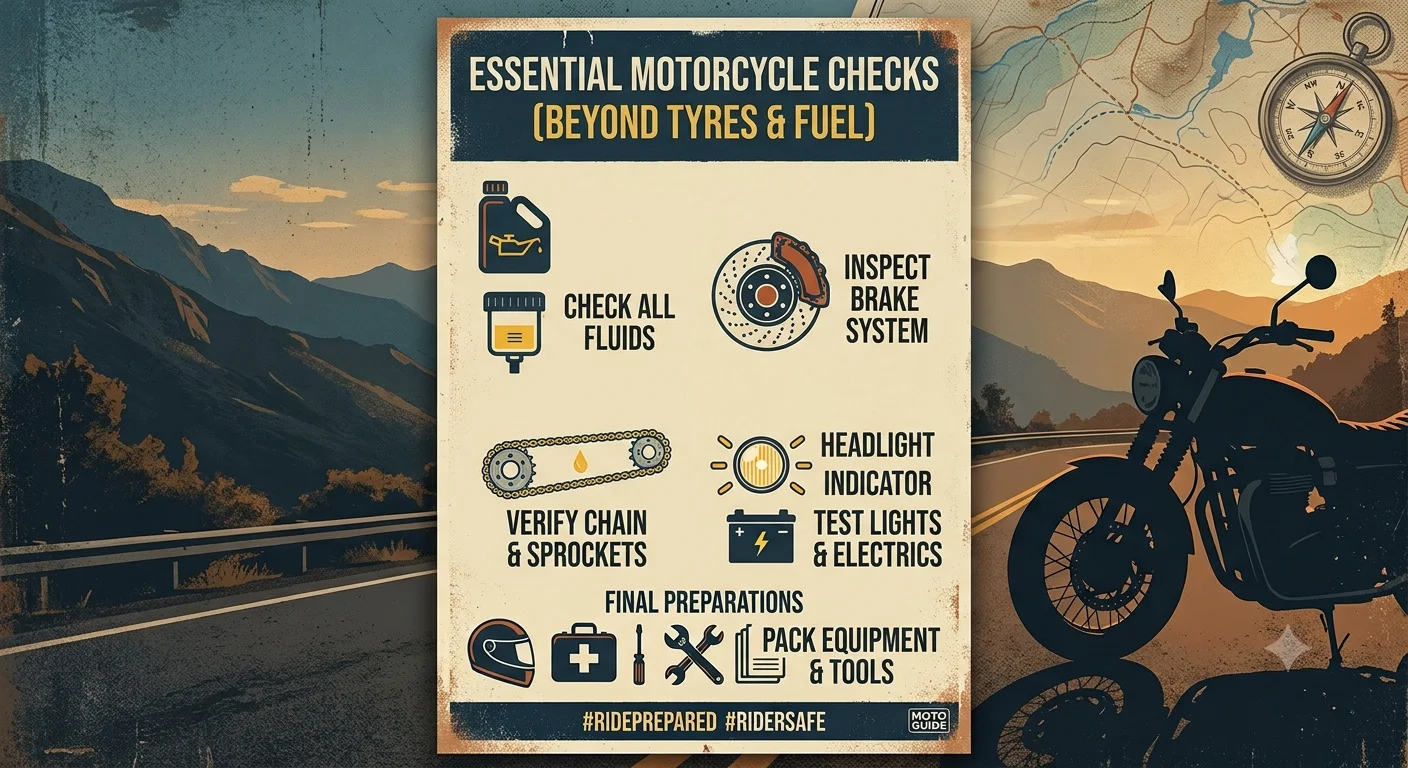
Most riders prepare for long rides the same way: fill up the tank, kick the tyres, wipe the visor, and feel ready for adventure. That works until 200 kilometres later, when something small starts whispering, “You should have checked me.” Long rides rarely fail dramatically; they unravel quietly. A loose bolt here, fading brakes there, or a numb wrist that refuses to cooperate by lunchtime. The difference between a smooth journey and a stressful one lies in the details riders often ignore because they are not flashy.
Chain Slack: The Silent Mood Swinger
Chains stretch over time. That is not a defect; it is physics. Before a long ride, check the slack as per manufacturer specifications, inspect lubrication for both presence and cleanliness, and look for uneven tension spots. A chain that is too tight eats into bearings, while a loose one slaps, jerks, and disrupts throttle smoothness, especially when the bike is loaded. If your motorcycle feels snatchy at low speeds, the chain is usually hinting at neglect.
Brakes: Feel Matters More Than Thickness
Most riders glance at brake pads and move on, but that tells only half the story. What matters more is the feel. Spongy levers often indicate air or moisture in the system. Braking should build progressively, not catch you by surprise. It is also important to test braking after a short ride to understand heat behaviour. Brake fade on descents or highways is not dramatic; it is deeply unsettling. If the brakes do not inspire confidence early on, they will not improve later.
Lighting: Visibility Is a Two-Way Contract
Seeing the road is only part of the equation; being seen is equally important. Check headlight alignment, especially if you are carrying luggage, along with brake light responsiveness and properly functioning indicators. Auxiliary lights must be securely mounted. A sagging suspension can tilt the headlight upward, blinding others while reducing your own visibility. Light placement is crucial, and so is basic road courtesy.
Suspension and Load Balance: The Forgotten Equation
Every motorcycle is designed with a specific weight distribution in mind, and luggage alters that balance significantly. Adjust the preload if carrying extra weight, ensure side luggage is evenly distributed, and secure the straps away from exhausts and moving parts. A rear-heavy motorcycle feels sluggish, while poor balance can cause instability at speed. If handling feels off, the issue is often the load, not the road.
Controls and Ergonomics: Comfort Is Control
Cables, levers, and ergonomics define rider comfort. Ensure the throttle returns smoothly, cables show no fraying, and clutch engagement remains consistent. Levers should suit your hand size. At the same time, evaluate your posture. Wrists should remain neutral, shoulders relaxed, and knees comfortably positioned. Small discomforts grow over hours. Pain distracts, and distraction compromises safety. A well-adjusted riding position enhances both comfort and confidence.
Final Checks and Ride Awareness
Electrical readiness and documentation are just as critical. Test charging ports, secure cables, and carry backup power. Confirm insurance, registration, and accessible digital copies. Once on the road, take the first ten kilometres slowly. Listen, feel, and make adjustments. The motorcycle communicates constantly, but only attentive riders notice. Long rides reward preparation, not bravado, and those who respect the details rarely encounter unpleasant surprises.