The Rise of Royal Enfield: From British Workshops to Global Favourite
There are motorbike manufacturers that produce machines, and then there's Royal Enfield - a corporation that creates memories, loyalty, and that distinct thump that…
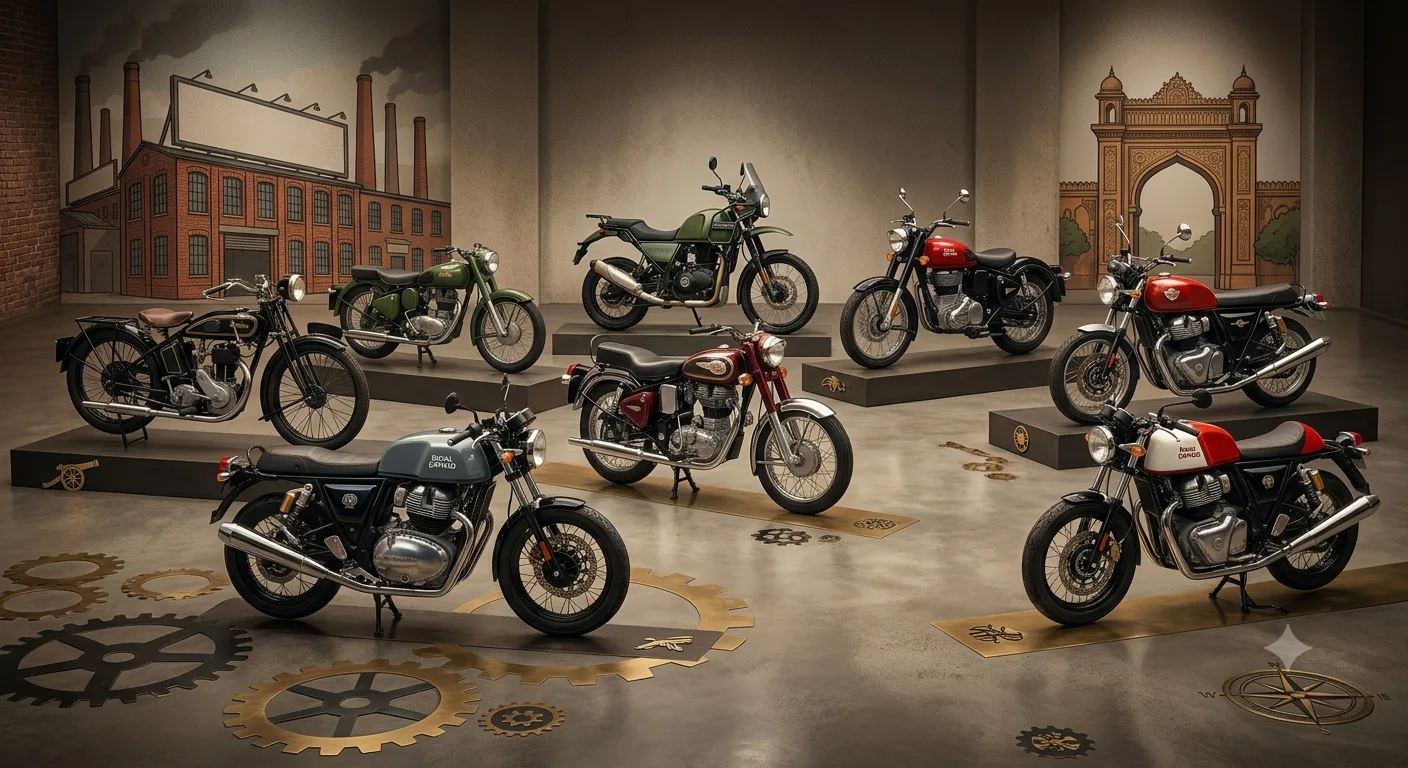
There are motorbike manufacturers that produce machines, and then there's Royal Enfield - a corporation that creates memories, loyalty, and that distinct thump that echoes through entire hill communities before the rider arrives. Few brands can claim to have survived empires, economic cycles, and fashion changes while somehow becoming cooler with age. Royal Enfield didn't simply survive. It transformed itself so dramatically that analysts use it as a case study, riders worship it, and hipsters in London and Bengaluru both claim to have discovered it first. Let's take a look back at how a little British studio grew into a global cult. Born in England, Forged in Persistence In the late 1800s, Royal Enfield began producing bicycles and cannon parts. It's hardly the most spectacular origin tale, but it does explain the iconic motto, "Made Like a Gun." By 1901, it had introduced its first motorbike, a motor mounted to a bicycle frame. It may not be something you would ride to Ladakh today, but it was groundbreaking at the time. The India Chapter No One Saw Coming A stroke of luck changed everything in the 1950s, when the Indian Army required dependable patrol motorcycles. Royal Enfield shipped the Bullet 350 from the United Kingdom, and the rest is not just commercial history, but also cultural history. India did not merely adopt the Bullet; it also adopted Royal Enfield. The pounding became the unofficial music for tiny towns, campuses, mountain rides, and roadside chai stands. While the British parent firm ceased operations, the Indian arm forged ahead, reinvented the brand, and transformed it into a global phenomenon. Royal Enfield did not only migrate; it transformed. The Motorcycle That Defined Generations Two machines led the charge: the Bullet, which was beloved by enthusiasts, and the Classic 350/500, which brought nostalgic appeal back to the public. Then came the Himalayan, which inspired riders to pursue high-altitude expeditions with renewed confidence. More recently, the Interceptor 650 and Continental GT 650 increased the brand's popularity in Europe, the Americas, and Southeast Asia. Riders raised on high-speed sport bikes gravitated toward simplicity, chrome, and classic style. Global Expansion: The Thump Heard Around the World Royal Enfield has actively expanded over the last decade, with design centers in the UK, production growth in India, and retail locations ranging from Milan to Bangkok. Today, it is one of the world's largest motorcycle manufacturers, thanks to a reinvention that many legacy businesses try but fail to achieve. And all this without abandoning its signature identity: Accessible, dependable, classic, and a little rebellious. Why Riders Still Love Royal Enfield Royal Enfield's attraction stems from its emotional connection. Riders frequently describe their experience as visceral - the machines feel alive. Maintenance is simple, ownership is accessible, and each ride conveys a feeling of occasion. The brand fills a unique niche, appealing to beginners, experienced riders, daily commuters, and long-distance explorers. Royal Enfield communities thrive throughout India, the UAE, and beyond, bonded by early morning rides, shared memories, and a shared respect for the journey as much as the goal. The Brand’s Secret Ingredient? Staying Human. Royal Enfield's success originates from its refusal to overcomplicate motorcycle riding. While the industry focuses on innovative technologies and silent propulsion, the brand prioritises experience, character, and approachability. It creates motorcycles that inspire rather than terrify. It establishes a presence that echoes rather than yells. In a world dominated by conformity, Royal Enfield continues to provide something unique: true character.